
Prostate (BPH)
Overview and Management
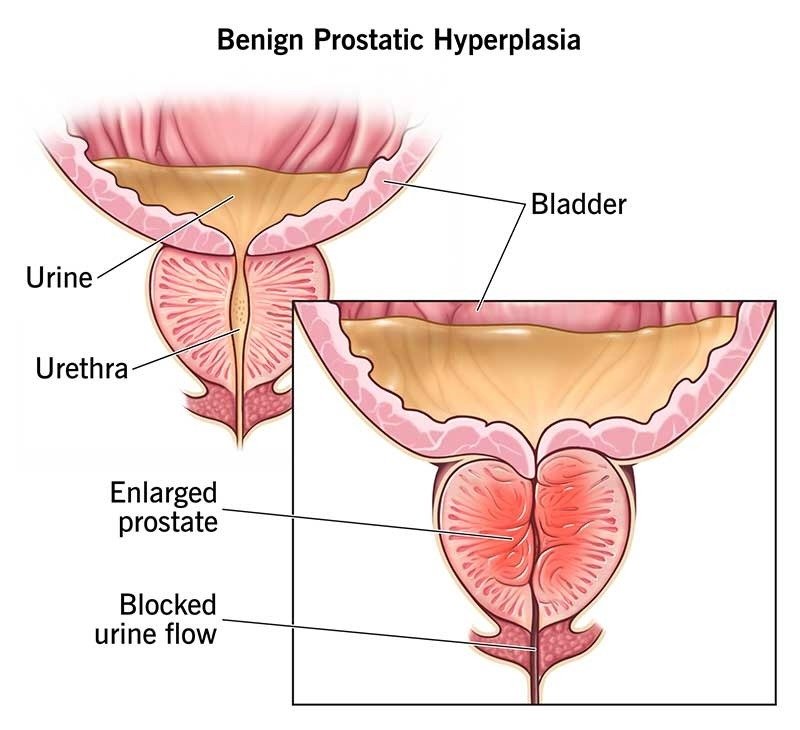
Benign prostatic hyperplasia (BPH) is when the prostate gland gets bigger. This gland is located below the bladder and is about the size of a walnut. It wraps around the tube (urethra) that carries pee and semen out of the body. When the prostate gets bigger, it can squeeze the urethra and make it hard to pee or ejaculate. BPH isn’t cancer, but it can have similar symptoms to prostate cancer, so it’s important to get checked by a doctor.
Benign prostatic hyperplasia and the risk of prostate cancer
Having BPH, which is an enlarged prostate, doesn’t make you more likely to get prostate cancer. But because both conditions share similar symptoms, it’s possible to have prostate cancer without knowing it if you only have BPH. To be safe, everyone with a prostate should get checked for cancer every year between ages 55 and 69. If you’re Black or have family history of prostate cancer, start getting checked at age 40.
How common is benign prostatic hyperplasia?
Benign prostatic hyperplasia is common.By age 60, about 50% of people with a prostate will have some signs of BPH. By age 85, about 90% will have signs of the condition. About half of all people with BPH will develop symptoms that require treatment.
Classifications of Piles, or Hemorrhoids
Internal Hemorrhoids : Internal hemorrhoids develop deep inside the rectum and may not be visible to the naked eye. They usually do not cause any pain, but you may notice slight bleeding through your anus.
External Hemorrhoids : External hemorrhoids develop on the outer edge of your anus. They may not be visible in some cases, but in other cases, they may look like lumps. External hemorrhoids cause severe pain and discomfort.
Thrombosed Hemorrhoids : Sometimes, blood clots develop within the hemorrhoid tissue. These are known as thrombosed hemorrhoids. They cut off the blood supply to the rectal tissue, causing extreme pain. If left untreated, thrombosed hemorrhoids can cause severe complications.
Prolapsed Hemorrhoids : Prolapsed hemorrhoids develop when the internal hemorrhoids swell and start to bulge outside the anus. They can cause itchiness, pain, discomfort, and a burning sensation.
Symptoms and Causes
Warning signs of benign prostatic hyperplasia
Your prostate surrounds your urethra. When BPH causes your prostate to grow, it can cause blockage in your urethra. As a result, early symptoms of BPH include:
Slowness or dribbling when you pee
Difficulty starting to pee
Leaking (incontinence)
Sudden need to pee (urgency)
Need to get up at night to pee
Inability to completely empty your bladder
Pain after ejaculating or while peeing
Pee changes colour
Pee smells
If you leave an enlarged prostate untreated
Without treatment, BPH can cause further blockage in your urethra, and your symptoms may worsen. It may also cause:
Urinary tract infection (UTI).
Bladder stones.
Blood in your pee (hematuria).
Kidney damage due to pee backflow from your bladder up to your kidney. The pee backflow increases pressure on your kidney.
Management and Treatment
There isn’t a cure for BPH. However, treatment options are available to help alleviate the symptoms.
If you have mild symptoms, you may not require any treatment. Your healthcare provider may recommend a “watchful waiting” approach in which you schedule regular appointments to ensure your BPH doesn’t get any worse.
Medications
The most commonly prescribed medications relax the muscle in your prostate, which reduces tension on your urethra. Some medications decrease the production of the hormone DHT, which can slow the growth of your prostate gland. These medications are most beneficial to people with larger prostates. Your healthcare provider may prescribe combined medications that help treat your symptoms as well as improve your urine flow.After you start a medication, it may take between one and eight weeks for your symptoms to improve.
Surgery
Several different types of surgery can remove prostate tissue that blocks your urethra. These include:
Transurethral resection of the prostate (TURP). Your urologist inserts a special instrument (resectoscope) through your urethra that allows them to see and remove prostate tissue.
Transurethral incision of the prostate (TUIP). Your urologist makes two small incisions in your prostate and where your urethra and bladder join (bladder neck) to widen your urethra and improve urine flow.
Common Questions
What can/can’t I eat/drink if I have benign prostatic hyperplasia?
Fruits, vegetables and healthy fats may benefit your prostate health. Consider following the Mediterranean diet or incorporating more of the following in your meals:
Berries.
Broccoli.
Citrus.
Nuts.
Tomatoes.
Turmeric.
A poor diet may worsen your BPH. If you have BPH, it’s a good idea to avoid processed foods, sugars and large amounts of carbohydrates, as well as:
Alcohol.
Caffeine.
Dairy.
Red meat.
Sodium (salt).
Can an enlarged prostate go back to normal?
In some people with mild BPH, their symptoms went away without treatment. If your symptoms don’t go away during a watchful waiting approach, you and your healthcare provider should start discussing treatment options.
How can I reduce my risk of developing benign prostatic hyperplasia?
The best ways to reduce your risk of developing BPH are to make lifestyle changes that improve your prostate and heart health and take supplements.
Exercising at least 30 minutes each day may help prevent BPH or slow prostate growth. Maintaining normal cholesterol, blood pressure and blood sugar levels is also important.
The following herbal supplements may also help reduce your risk of developing BPH:
Beta-sitosterol. Beta-sitosterol is a micronutrient in plants that may help keep your heart healthy.
Pygeum africanum. Pygeum africanum is an herbal extract from African cherry tree bark that may help shrink your prostate.
Flaxseed. Flax is a good source of dietary fiber and omega-3 fatty acids that may help lower your cholesterol.
Pumpkin seed oil. Pumpkin seed oil comes from pumpkin seeds. It may help shrink your prostate.
Talk to your healthcare provider before taking any new supplements. They may adversely react to other supplements or medications you’re currently taking.
When should I see my healthcare provider?
If you have any of the following symptoms, call your healthcare provider right away:
Pain in your lower abdomen or genitals while peeing.
Difficulty peeing or an inability to pee at all.
Fever or chills while peeing.
Blood in your pee.
What is the difference between prostate cancer and benign prostatic hyperplasia?
Prostate cancer and BPH are two different conditions of the prostate gland. Prostate cancer is a type of cancer that may not cause symptoms at first, but can spread to other parts of the body if it grows. BPH is not cancer and doesn’t spread, but it can also cause problems with urination.Both conditions can make it hard to pee, cause pain when peeing or ejaculating, and make you feel like you need to pee more often. The main difference is that prostate cancer can be dangerous and spread, while BPH is generally not harmful and stays in the prostate.The treatments are different too: cancer may need radiation or surgery, while BPH can be treated with medicine, surgery, or other procedures.
What is the difference between benign prostatic hyperplasia and benign prostatic enlargement?
BPH is the name of a condition that causes your prostate to increase in size. Benign prostatic enlargement (BPE) is a term that healthcare providers use to describe the increased size of your prostate gland due to BPH.