
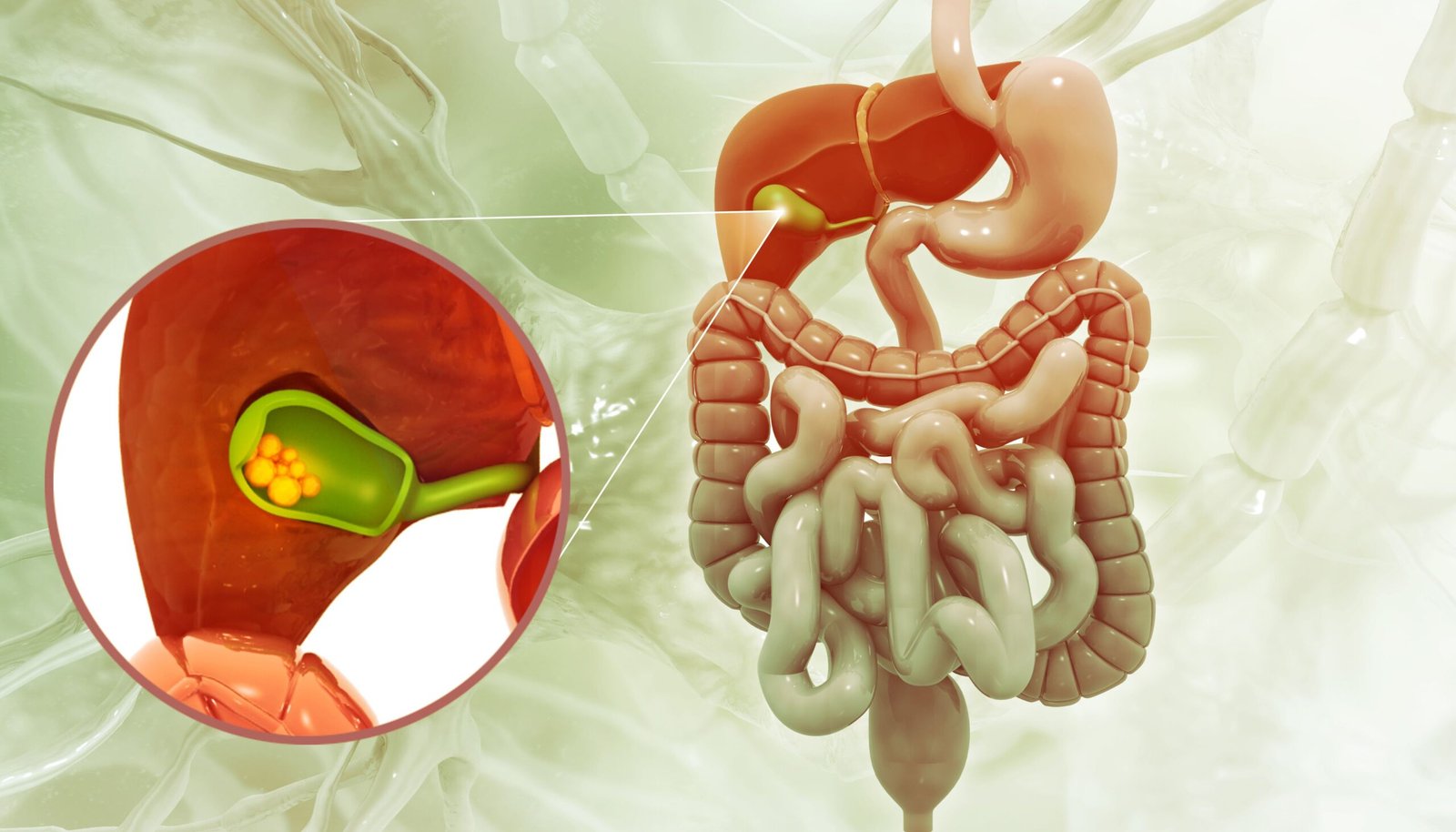
Gallstones are hardened deposits of digestive fluid that can form in your gallbladder. This small organ sits just beneath your liver and aids in digestion by storing bile. Gallstones can vary in size and number, often leading to significant discomfort and health issues.
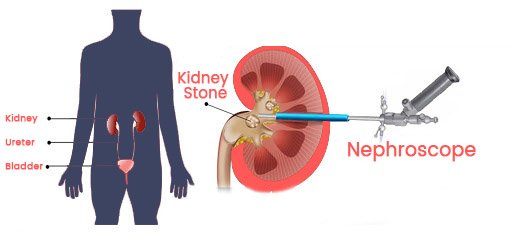
Percutaneous nephrolithotomy/ nephrolithotripsy, abbreviated as PCNL, is a surgical technique designed to extract notably large kidney stones or those in the upper ureter through a minimally invasive approach. The procedure entails a small incision in the side of the body, enabling surgeons to either remove the stones or fragment them into smaller pieces, typically with negligible risk of complications. PCNL is particularly advantageous for stones that are too substantial for other treatments to address. It is known for its high rate of completely clearing stones, especially those over 2cm in diameter, often making it a preferable alternative to open surgery.
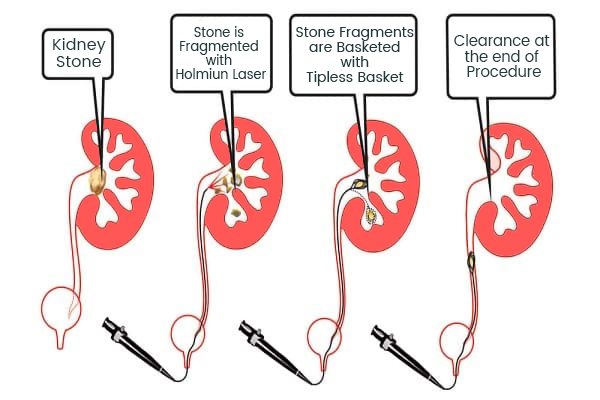
Retrograde Intrarenal Surgery, or RIRS, is a method of removing kidney stones that utilizes a ureteroscopic approach. This minimally invasive surgery employs the urethra as a channel to access the kidneys without the need for incisions. An optical endoscope is used to navigate to the kidneys, detect the stones, and then a laser is employed to pulverize the stones into dust. RIRS is typically reserved for large or intricate stones that are not suitable for lithotripsy treatment. The procedure boasts a high success rate with an exceedingly low risk of complications.