
Overview
What is dialysis?
Dialysis is a treatment for people whose kidneys are failing. When there a kidney failure, kidneys don’t filter blood the way they should. As a result, wastes and toxins build up in the bloodstream. Dialysis does the work of the kidneys, removing waste products and excess fluid from the blood.
Who needs Dialysis?
Dialysis may be necessary for those with kidney failure or end-stage renal disease (ESRD). Kidney damage leading to disease can result from injuries or conditions like high blood pressure, diabetes, or lupus. In some cases, the cause of kidney problems is unknown. Kidney failure may be a chronic issue or a sudden onset after severe illness or injury, with the latter potentially reversible.
Kidney disease progresses through five stages. Stage 5 indicates end-stage renal disease or kidney failure, where kidney function is significantly reduced. At this stage, dialysis or a kidney transplant may be required for survival. Some individuals undergo dialysis while awaiting a transplant.
What do kidneys do?
Kidneys, part of the urinary system, are two bean-shaped organs located below the ribcage on each side of the spine. Their primary function is to filter toxins from the blood, returning clean, nutrient-rich blood to the bloodstream. Waste and excess water create urine, which travels from the kidneys to the bladder. Additionally, kidneys play a role in regulating blood pressure.

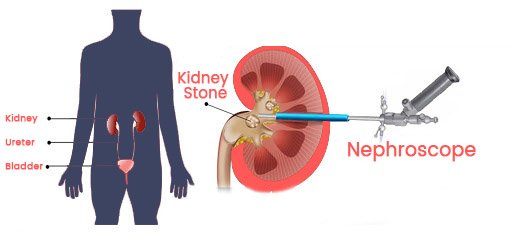
Percutaneous nephrolithotomy/ nephrolithotripsy, abbreviated as PCNL, is a surgical technique designed to extract notably large kidney stones or those in the upper ureter through a minimally invasive approach. The procedure entails a small incision in the side of the body, enabling surgeons to either remove the stones or fragment them into smaller pieces, typically with negligible risk of complications. PCNL is particularly advantageous for stones that are too substantial for other treatments to address. It is known for its high rate of completely clearing stones, especially those over 2cm in diameter, often making it a preferable alternative to open surgery.
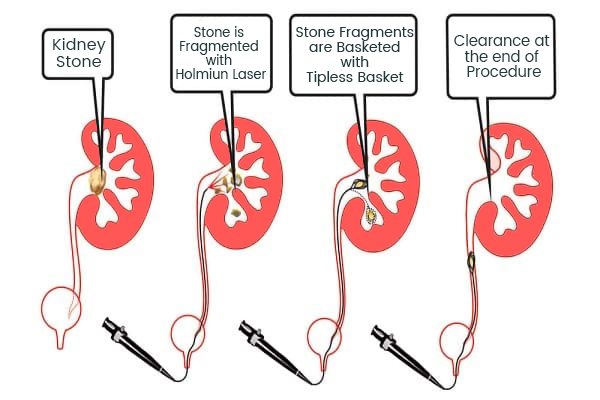
Retrograde Intrarenal Surgery, or RIRS, is a method of removing kidney stones that utilizes a ureteroscopic approach. This minimally invasive surgery employs the urethra as a channel to access the kidneys without the need for incisions. An optical endoscope is used to navigate to the kidneys, detect the stones, and then a laser is employed to pulverize the stones into dust. RIRS is typically reserved for large or intricate stones that are not suitable for lithotripsy treatment. The procedure boasts a high success rate with an exceedingly low risk of complications.